.png)


PLAN AHEAD
Adding an Annex? Plan Your Drainage
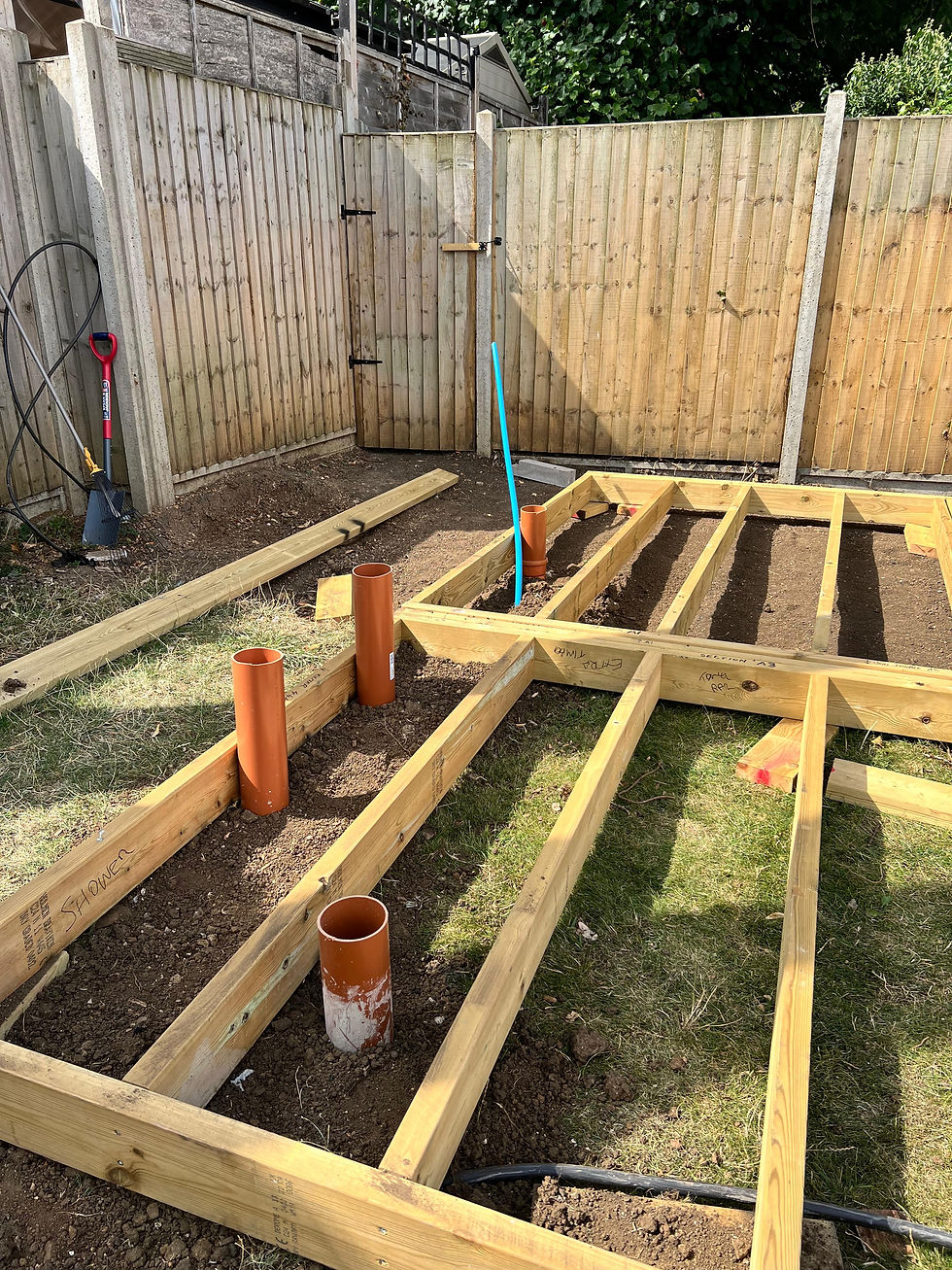
Building a garden annex is a fantastic way to create additional living space for family, guests, or even as a home office. Alongside planning the structure, it is essential to consider how wastewater will be managed.
The right drainage solution ensures comfort, compliance with regulations and long term property value. If you are researching annex drainage in Northamptonshire, this guide explains your options and what to expect.
Four Main Annex Drainage Options
Mains Sewer Connection
In many cases, the most efficient and cost effective solution is connecting the annex to your existing mains sewer. This eliminates the need for ongoing maintenance associated with standalone systems. Where possible, pipework is routed to your property's foul drain, then on to the public sewer.
Septic Tank & Drainage
Suitable for properties without mains sewer access, septic tanks treat wastewater before discharging it to a drainage field. This option requires the correct ground conditions and regular water flow to function effectively.
Sewage Treatment Plant
A treatment plant cleans effluent to a high standard, allowing discharge into a watercourse under the General Binding Rules. These systems are ideal for regular use and can be designed to handle low flow situations.
Sealed Tank Cesspit
A sealed tank that stores waste until it is emptied by a tanker. Due to high running costs, this is usually only chosen when other options are not possible.
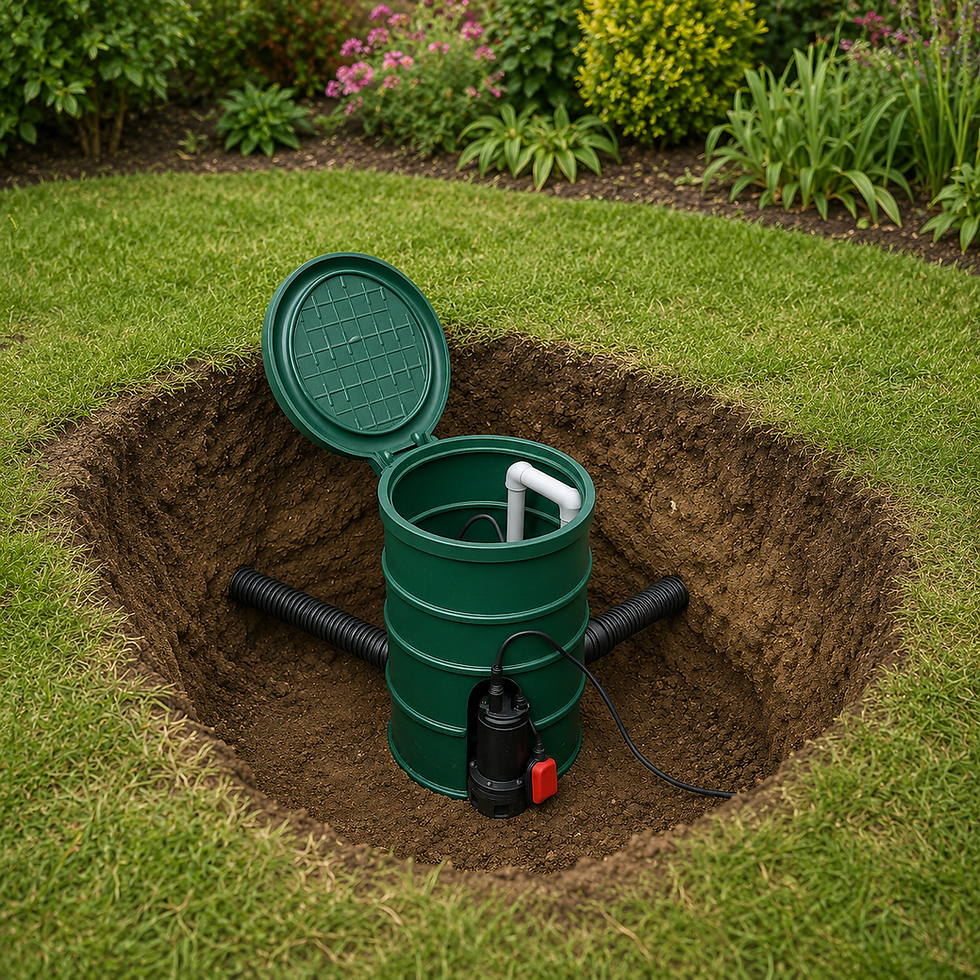
ADDITIONAL EQUIPMENT
When a Pumping Station is Needed
If the annex sits lower than your main property or the public sewer, a gravity connection may not be possible. In this case, a compact domestic pumping station can transport wastewater to the mains.
Pump stations are designed for quiet, reliable operation and can be tailored to suit the distance and height the waste needs to travel. They are an essential piece of kit for low lying or basement style annex builds.
DO IT BY THE BOOK
Planning, Permissions and Compliance
Annex Ownership Restrictions
Some annexes are approved on the basis that they remain part of the main property and cannot be sold separately. This can affect drainage design and connection requirements.
Part H Building Regulations
Septic tanks and drainage fields must comply with Part H of the Building Regulations to be lawful and safe.
General Binding Rules
Discharges from treatment plants must meet the General Binding Rules to avoid pollution and potential penalties.
Before starting work, check local planning conditions and building regulations. Three key things to be aware of:
Working with an experienced drainage contractor ensures that your system is designed, installed and certified correctly.
RECENT ANNEX PROJECTS
Annex Drainage Work in Northamptonshire
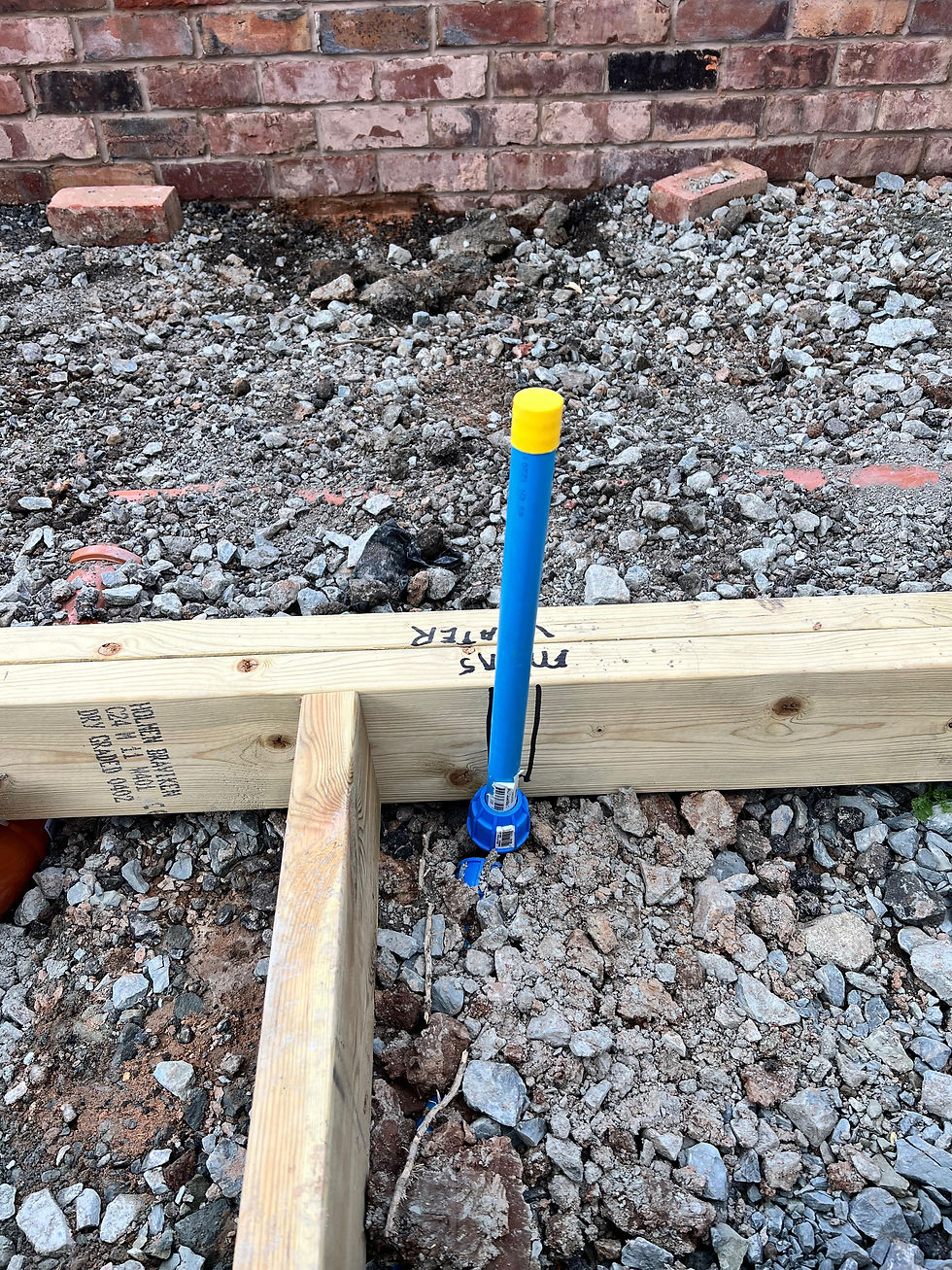
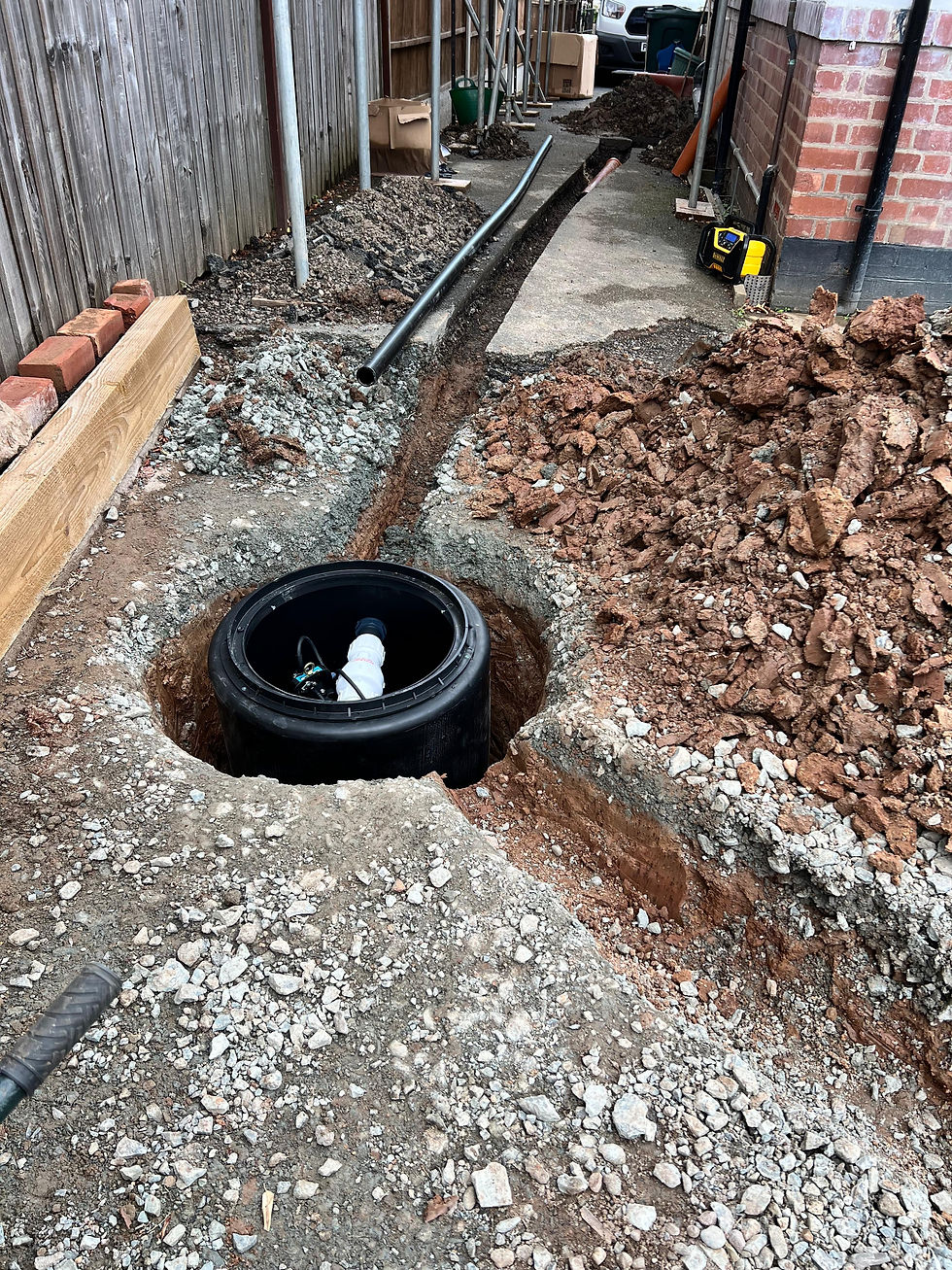
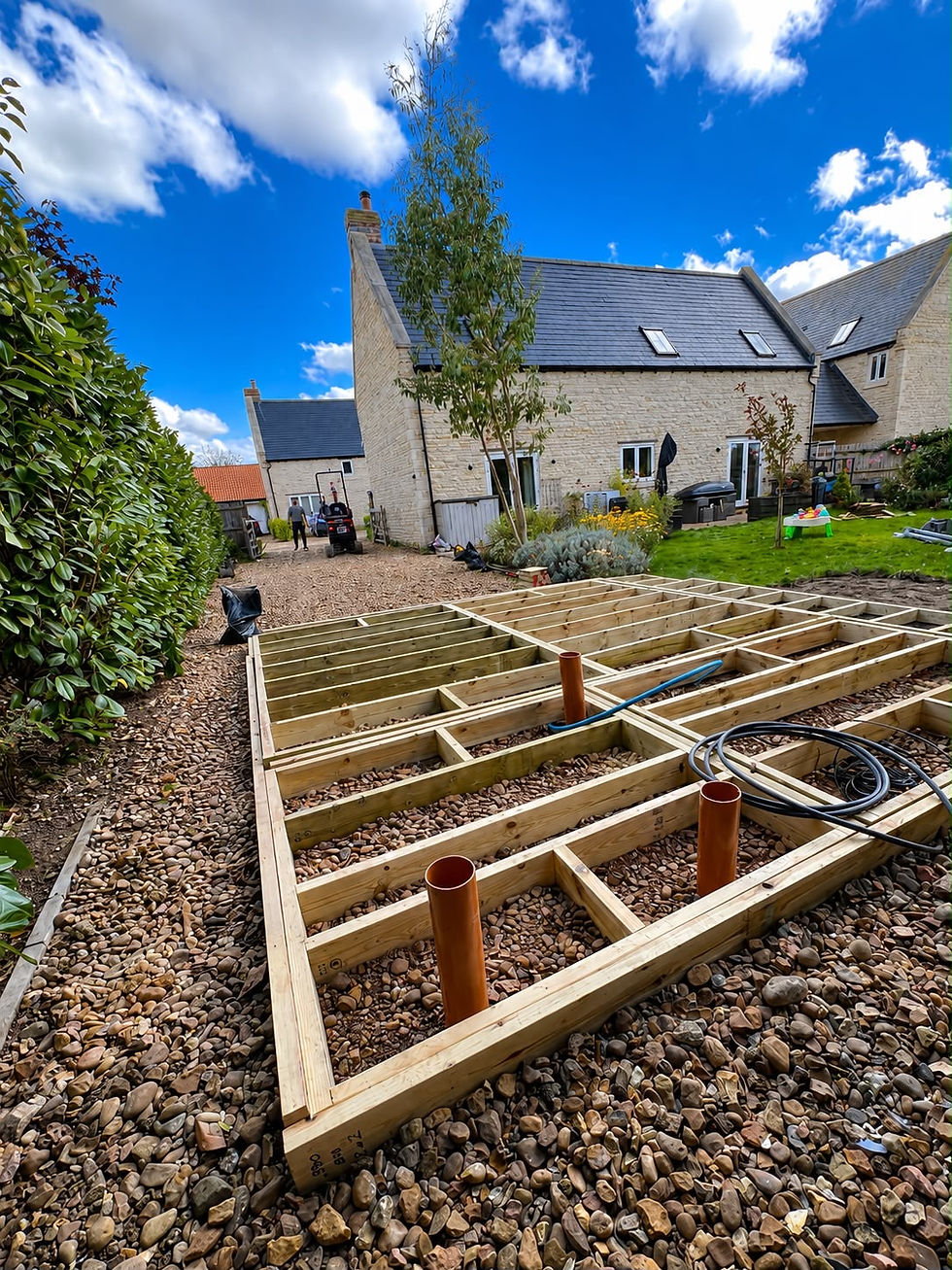
A selection of recent annex drainage installations across Northamptonshire showing pumping stations, PVC pipework and inspection chambers.






WHY CHOOSE ATTGILLS
Why Choose Attgills for Annex Drainage in Northamptonshire

At Attgills Drainage Services, we provide complete annex drainage solutions tailored to your property. Our expert team will assess your site to determine the most suitable approach, whether that is a direct mains connection, a septic tank, a treatment plant or a pumping station.
We handle every stage, from site survey and trenching to installation and final testing, ensuring compliance with all regulations.
With in-depth local knowledge, prompt service and a commitment to high quality workmanship, we are the trusted choice for homeowners across Northamptonshire.
FREE CONSULTATION